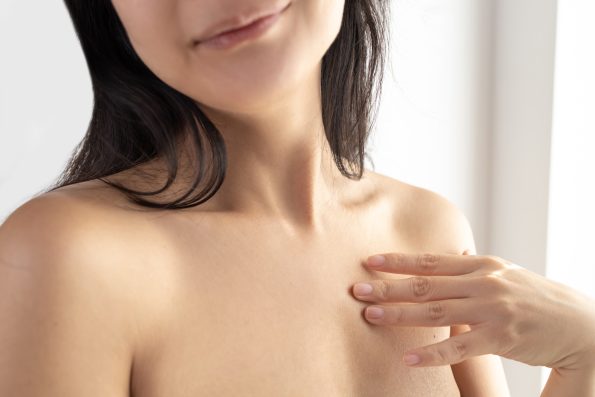
Things to consider when choosing a scar treatment
When a wound occurs, the body forms a scar to protect the wound during healing. In the best of worlds, this scar would blend in and look just like normal skin, but this is not the case. Scar tissue differs from normal skin in many ways. For example, it is less elastic, and lacks hair follicles and sweat glands. It is also more sensitive to the sun's rays. Scar tissue usually looks different, which is why we talk more about reducing scars, rather than removing them completely.
Reducing scars with silicone technology is something patients and surgeons around the world have been doing for decades. But what should you really consider when choosing a scar treatment product?
First, it is important to look at the characteristics of the scar. The size, depth, location and age of the scar are all factors that affect the appearance of the scar, and what scar treatment is needed. Below we describe what works best based on different types of scars.
OLD YEARS
The products work on all types of scars, new and old, but results may vary. The best results are achieved when the scar is active and in the process of healing. Active scars are red and raised, while fully healed scars are white or brownish-purple. Scars are often most active in the first few months, but can be reduced even after that. Treatment can start as soon as the wound has healed and an intact scar tissue has formed.
The best results are achieved with early treatment, but the scar does not have to be completely new for silicone technology to be effective. The time it takes for scars to heal varies from person to person and differs between different scars. The healing process usually takes a few months to a year, but a deeper scar can be active for several years. The Pro-Sil staple, for example, has produced positive clinical results on scars as old as 15 years.
One option if the scar has become inactive is to treat the scar with laser first, to soften and reactivate the scar tissue. After that, you can use our products to further reduce the scar.
HYPERTROPHIC SCARS & KELOIDS
Hypertrophic scars are raised, often red, thick and may itch. These scars are due to an overproduction of tissue and usually form within a few weeks of the injury. Hypertrophic scars are more likely to form in the creases of joints and in areas of high skin movement, such as the face, armpits and between the fingers. Scarring cannot be prevented, but with the right treatment, the scar can be reduced and become soft, pale and pliable. Keloid scars are similar to hypotrophic scars, and are thick and irregular in shape but often extend beyond the wound surface. Medical silicone can be used preventively and to soften and smooth hypertrophic scars and keloids.
ATROFIC YEARS
Pitted scars that are common after acne and chickenpox. Pitted scars (atrophic) have too little supporting tissue and cannot be filled in because there is no tissue to work with. Dermasof Silk can soften the skin.
DISCOLORED SCARS
The most common cause of discolored scars is the sun's rays. Scar tissue is more sensitive to UV radiation than normal skin. High exposure to UV radiation can make healing more difficult and often discolors scars. The pigment change can result in a lighter or darker color. To avoid discoloration, it is important to always protect your scar from sunlight, even on cloudy days. Discoloration is long-lasting but can be reduced with Pro-sil, which softens and smooths the scar.
Which product should I choose?
ACNE SCARS AND PIMPLES
Our products work great on acne and pimple scars. It is important that the scars are active to achieve the best results. The products do not contain any chemicals or perfumes that irritate or dry out the skin. Spot treatment with Pro-sil or treatment with Dermasof Silk serum helps to smooth the scar tissue and even out skin tone from discoloration.
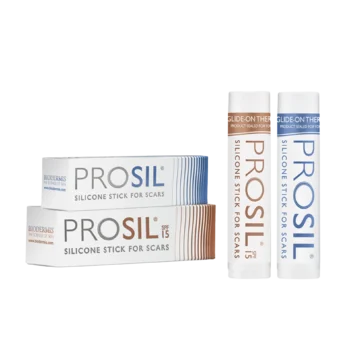
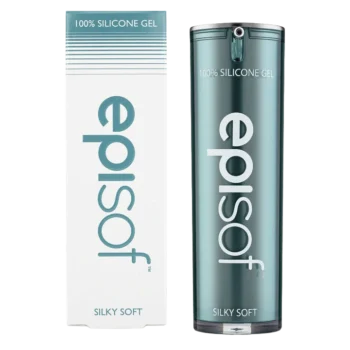
Please note that the products are not acne treatments and should not be used to remove acne/blemishes. Do not apply Pro-sil or Dermasof Silk to active acne/inflamed skin.
SCARS FROM SURGICAL PROCEDURES
Today, many surgical procedures are performed with high precision and accuracy. If everything goes right, the scars are just fine white lines. But the risk of infection is high when the skin is subjected to major surgery. Scars can heal improperly and feel swollen and hard, or sink in. Uneven surgical scars can be reduced with Epi-derm, a range of silicone gel tapes specifically designed for surgical scars and operations of various types. Epi-derm is clinically proven to both reduce existing scars and prevent new scarring. The tape is thin and molds to the contours of the body. Epi-derm can also be cut and customized as needed. Because our silicone gel patches stay on the treatment area for a longer period of time during the day, they can also provide results faster than other products that need to be reapplied. However, we strongly recommend that Epi-derm treatment is complemented by Pro-sil for smoother and more effective results.
Breast surgery
For breast lifts and augmentations, Epi-Derm Mastopexy, Areopexy or Areola Circles are used. Which shape is used when depends on the appearance of the scar and the method used for breast reconstruction. It is also possible to combine and customize the different shapes according to the desired treatment area.


Caesarean sections and operations in the womb
Specially adapted Epi-Derm C-strips are available for caesarean sections.

If you want a larger option, there is also the Epi-Derm Long Strip, which is also adapted for scars from hysterectomy and uterine surgery.

Minor scars from surgical procedures
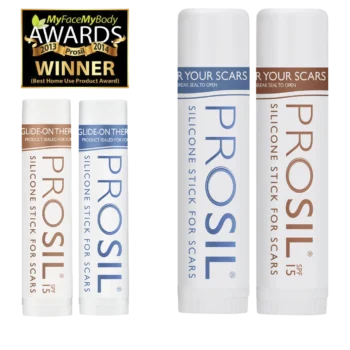
For scars from minor surgeries, for example on the face (eyelids, ears, nose), it can be difficult to use tape. Therefore, Pro-sil is recommended for these treatment areas.
BURN INJURY
Burn scars are important to treat as they can affect the nerves and contribute to impaired sensation and limited mobility. Usually, the skin becomes soft and supple, but sometimes a reddened, tight, raised and tender scar, known as a hypertrophic scar, forms instead.
Scarring depends on the depth of the injury, whether the wound becomes infected, whether the skin is grafted and how old you are. It is important to start treatment as early as possible, as soon as the skin is no longer inflamed. For burn scars, treatment with Dermasof Silk Serum is recommended to soften and smooth the scar tissue. For smaller scars, it is also possible to spot treat with the Pro-sil pin.